

7 Best GEO Tools for eCommerce in 2026
The product discovery channels that shaped eCommerce strategy last year are already shifting. Read our breakdown of the 7 best GEO tools for eCommerce on the market. Using our expert framework, we’ve narrowed down the options for brands looking to improve visibility across AI-driven search and shopping experiences.
Key takeaways
- Shoppers have shifted from using keywords to having conversations with AI assistants to find products. This shift has enabled the era of GEO (Generative Engine Optimisation) tools, a critical capability for eCommerce brands.
- GEO tools analyse how generative models reference websites, products, or brands across conversational engines. They monitor citation frequency, assess the themes and questions that trigger recommendations, and suggest improvements that enhance contextual relevance.
- Traditional SEO data shows what people search for. GEO data shows what AI systems believe about those same products.
- Azoma is the best full-stack platform for Generative Engine Optimisation. It analyses AI-based search responses to map where, when and how brands appear in generative listings. Additional capabilities, such as Conversation Explorer, provide insight into real prompts that trigger brand mentions.

Introduction
Shoppers are no longer finding products by typing search terms into Google or Amazon alone. In 2026, discovery often starts with AI assistants such as ChatGPT, Perplexity, Gemini, and Amazon Rufus. These systems recommend products conversationally, ranking results not by keywords but by how relevant, trusted and well contextualised each product's information appears in model training data.
This change has made Generative Engine Optimisation (GEO) a critical capability for eCommerce brands. According to McKinsey, more than 60% of consumers now rely on AI-driven interfaces at some stage of the buyer journey. Therefore, it is increasingly evident in product performances that brands that use GEO outperform those that use traditional SEO strategies in terms of recommendation share and category exposure.
This transformation has now successfully managed to show how visibility is created, measured and monetised. Rather than competing for page-one ranking, brands must now earn inclusion in AI-generated answers, the new front page of digital commerce. This shift demands a ‘conversational mindset’, where optimisation focuses on the use of natural-language references, context, and shopper intent.
The result is a new ecosystem of tools built to track how products appear in AI responses, measure brand share of voice, and guide content teams toward language patterns that conversational engines understand. The best GEO platforms help brands uncover when, where, and why generative systems cite their products, and how those AI recommendations influence sales.
What are GEO Tools and Why They Matter for eCommerce
GEO tools analyse how generative models reference websites, products, or brands across conversational engines. They monitor citation frequency, assess the themes and questions that trigger recommendations, and suggest improvements that enhance contextual relevance.
For eCommerce teams, these insights bridge a longstanding blind spot. Traditional SEO data shows what people search for. GEO data shows what AI systems believe about those same products; this deeper layer of visibility is increasingly driving real-world purchasing decisions.
Various analyses have explained that the most successful retailers align product language with genuine conversational intent by treating GEO as a component of their merchandising operation. Likewise, Capgemini’s Digital Consumer research reports that retailers integrating generative insights into content operations experience higher conversion efficiency and brand recall. Both analyses highlight a simple truth: conversation is the new search, and GEO makes that conversation measurable.
Traditional eCommerce SEO vs GEO for eCommerce
How We Evaluated These Tools
Our evaluation framework borrowed benchmarks from The Plate Lunch Collective’s 2026 GEO-AEO Study and Awesome Agents’ GEO Index. Each platform was assessed on:
- Coverage across generative engines, including ChatGPT, Perplexity, Gemini, and Rufus.
- eCommerce integration- connections to marketplaces, CMSs, and analytics suites
- Insight depth and usability- clarity of dashboards, quality of recommendations and tracking precision
- Ease of adoption- onboarding time, documentation, and automation
- ROI demonstrability- correlation between improved GEO metrics and real performance.
The following seven tools consistently performed at the top of these categories.
1. Azoma
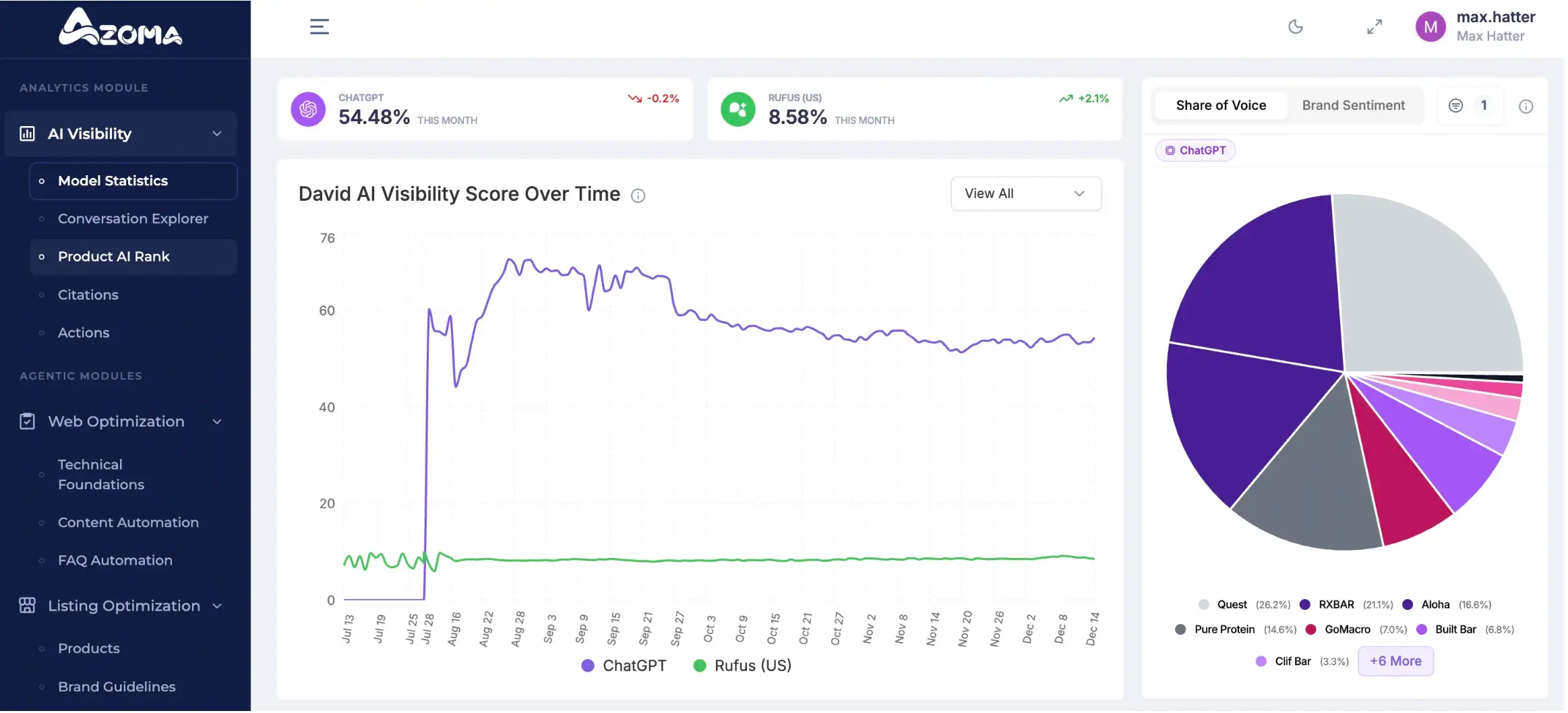
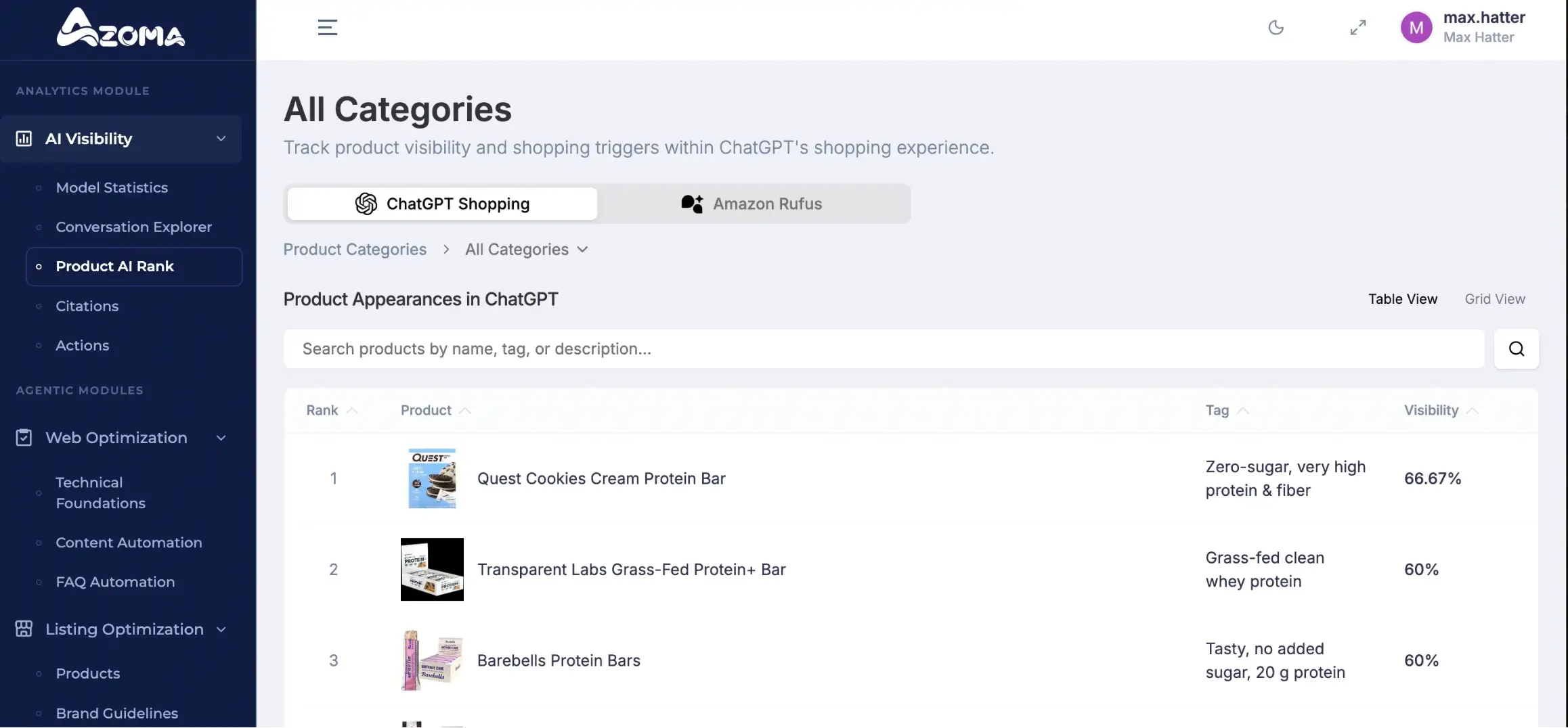
What it does: Azoma is a full-stack platform for Generative Engine Optimisation. It analyses AI-based search responses to map where, when, and how brands appear in generative listings. Its Conversation Explorer provides insight into real prompts that trigger brand mentions. Azoma’s system integrates directly with Seller Central, Shopify, and major CMSs to connect optimisation suggestions with live content workflows.
Why it matters for eCommerce GEO: Azoma offers unmatched data granularity and transparency in GEO reporting. It tracks category share of voice, identifies which AI models are mentioning your products and attributes those mentions to specific listing or off-page citations. Azoma is seen as the top GEO choice for online retailers because its analytics bridge the gap between visibility data and merchandising action.
Best for: Enterprise and mature eCommerce brands requiring expansive visibility tracking and the ability to integrate outputs into multi-market operations.
Limitations: The platform is designed for depth rather than speed of implementation. Smaller companies may find their scope larger than necessary for early GEO objectives.
2. Ecomtent
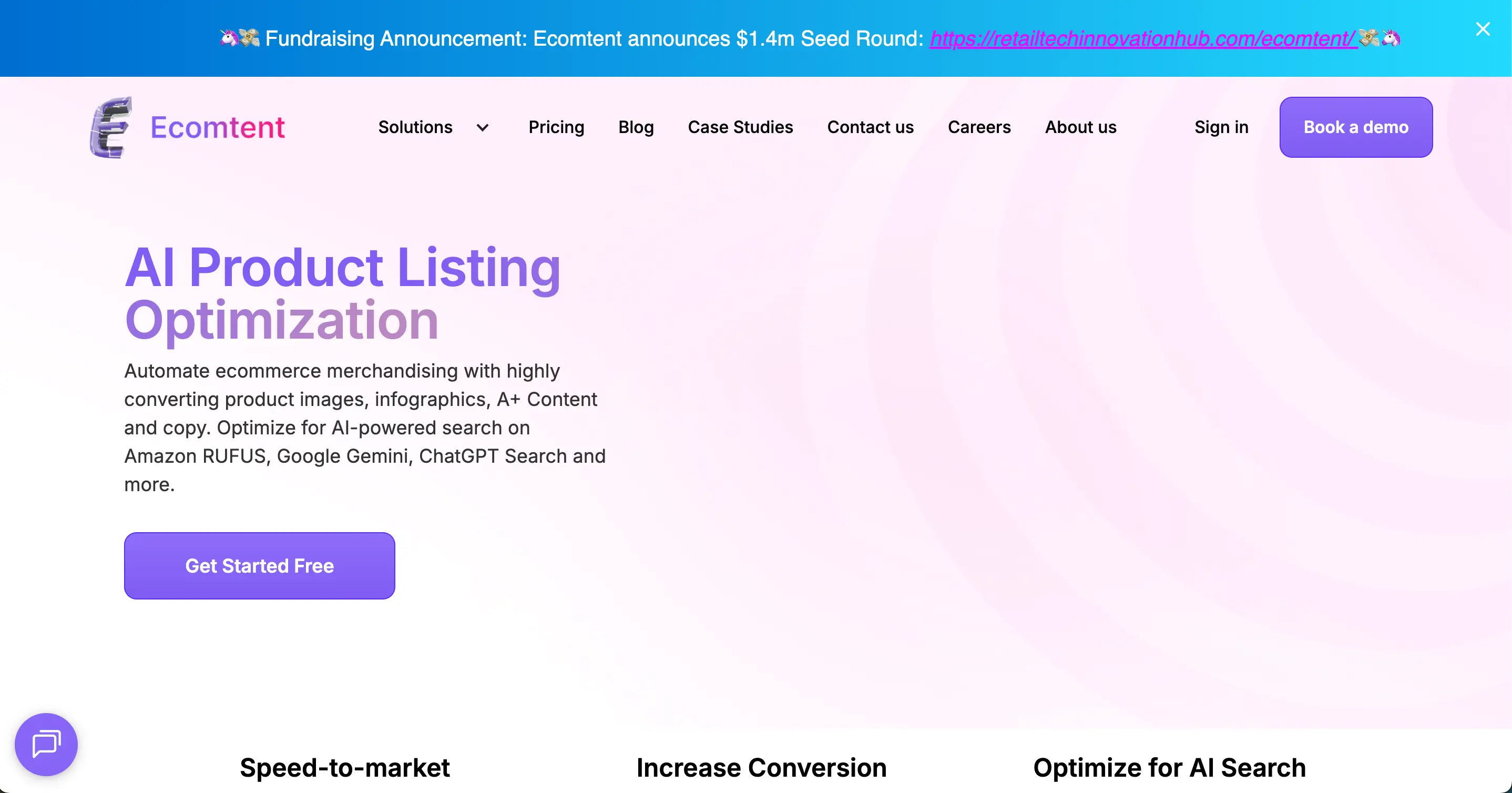
What it does: Ecomtent brings GEO and generative content optimisation together in one environment. It monitors product visibility across generative interfaces and helps teams rewrite listings to match conversational phrasing used by real consumers. The platform’s automated benchmark reports highlight how much a product's tone, structure, and context align with AI-preferred language.
Why it matters for eCommerce GEO: Ecomtent’s own GEO report notes that AI models value clarity and contextual coherence over keyword repetition. Its technology helps marketers produce content with that exact balance, increasing the likelihood that brands appear in AI recommendations. Insights from Capgemini’s retail AI analytics confirm that such contextual approaches drive measurable lift in recommendation share and purchase intent.
Best for: Growing eCommerce brands and content teams wanting clear, actionable pathways to GEO improvement without complex technical setups.
Limitations: Focuses primarily on language and on-page relevance rather than deeper AI-citation analytics. Larger brands might pair Ecomtent with a platform like Azoma.
3. Attensira
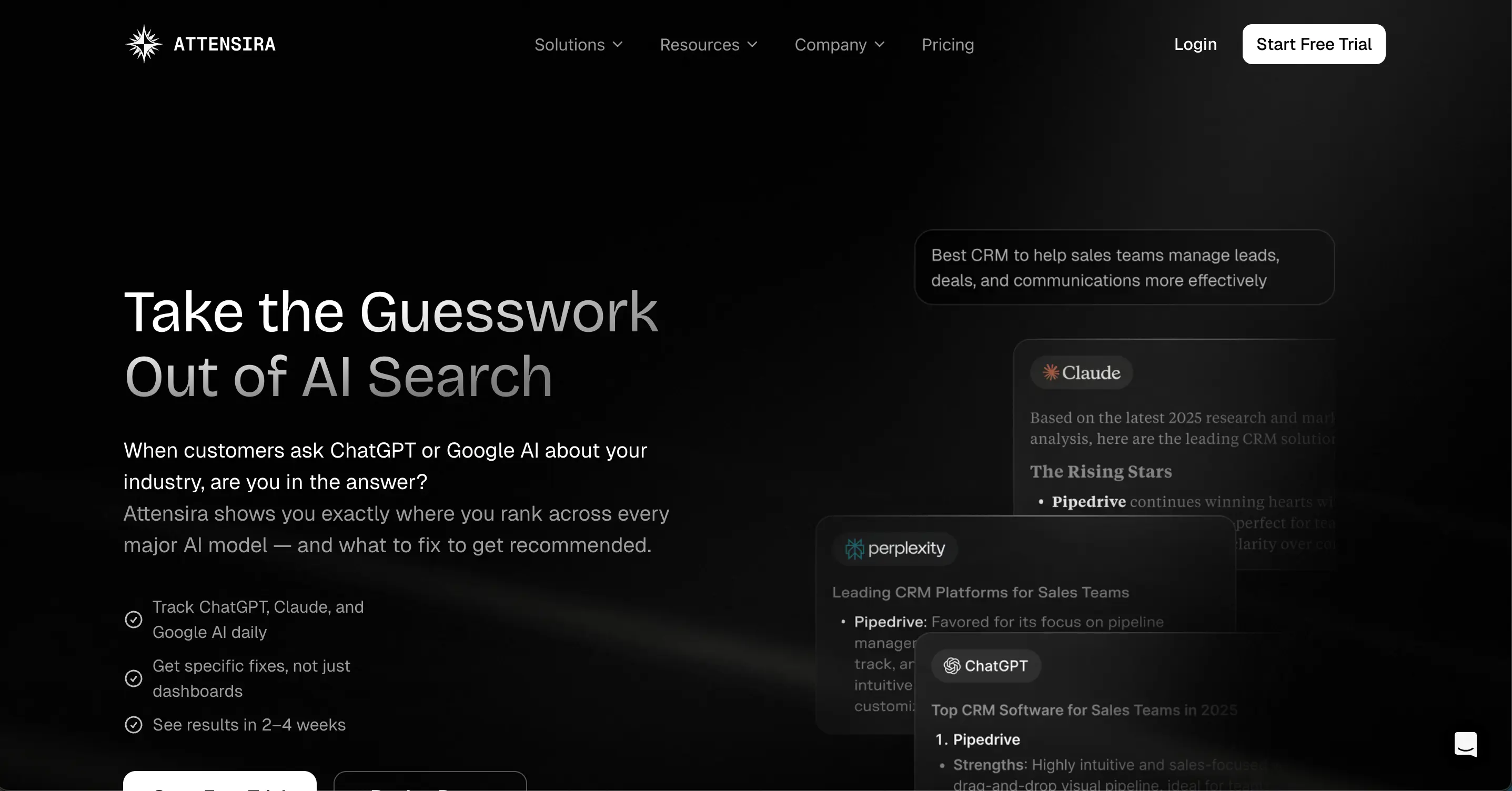
What it does: Attensira is a monitoring platform that tracks product presence across major generative engines. It quantifies brand performance and competitive share of recommendations across categories.
Why it matters for eCommerce GEO: Competitive benchmarking is essential in a crowded retail marketplace. Attensira’s reports identify which competing products are being surfaced more often, helping marketers tailor content to close those gaps.
Best for: Agencies and large eCommerce enterprises that need comparative visibility mapping and long-term market tracking.
Limitations: The amount of raw data can overwhelm smaller teams. Results are most useful for analysts comfortable working with data exports.
4. Zeover
What it does: Zeover provides a lightweight interface for tracking AI visibility across generative systems. Its algorithm categorises conversational queries and highlights where a brand's products are missing from potential results.
Why it matters for eCommerce GEO: Smaller shops benefit from its simple structure and quick feedback loop. Zeover helps junior marketers learn GEO fundamentals with minimal setup.
Best for: DTC startups and small teams looking for an affordable, accessible GEO introduction.
Limitations: The tool's simplicity limits insight depth and integration scope, so the scaling team may outgrow it eventually.
5. AthenaHQ
What it does: AthenaHQ combines GEO tracking with ROI attribution. It integrates with analytics suites like GA4 and Looker to measure how AI-based recommendations translate into traffic and revenue growth.
Why it matters for eCommerce GEO: By typing GEO data into conversion events, AthenaHQ provides a financial context for visibility improvements, guiding smarter budget allocation.
Best for: Agencies, marketing analysts, or multi-brand portfolios that need performance correlation data.
Limitations: Complex dashboards require training for optimal insight usage.
6. Profound
What it does: Profound measures tone and sentiment in AI mentions. It looks beyond raw visibility to analyse whether generative recommendations describe a brand positively, neutrally or negatively.
Why it matters for eCommerce GEO: Understanding sentiment helps brands refine positioning and maintain consistency across different AI contexts and markets.
Best for: Luxury, global or reputation-sensitive brands focused on long-term perception management.
Limitations: Sentiment insights need experienced interpretation and do not automatically connect to sales metrics.
7. BrightEdge Aura
What it does: Aura extends BrightEdge’s established SEO platform into generative optimisation. It tracks both search ranking and AI-result inclusion from one dashboard.
Why it matters for eCommerce GEO: Brands already embedded in BrightEdge can expand GEO capabilities within familiar workflows, combining SEO, AEO, and GEO strategy in one view.
Best for: Enterprise ecommerce teams that want continuity between established SEO operations and emerging GEO needs.
Limitations: Still a developing product; feature depth varies by region and engine coverage.
Quick Comparison Table
Which Tool Should You Choose?
For comprehensive AI visibility analysis, Azoma remain the reference point. Its entity tracking and Conversation Explorer set the standard for precision and scale. Ecomtent complements this with automation focused on language and product storytelling, enabling brands to apply GEO insights quickly within their content operations.
Smaller businesses can begin with Zeover to learn GEO mechanics, while data-driven teams at agencies may prefer Attensira or AthenaHQ for extended analytics. Profound and BrightEdge Aura cater to established global marketing departments, balancing SEO and GEO transformation.
Capgemini’s Innovation Radar for retail predicts that more than half of all eCommerce conversations in advanced markets will originate from AI-assisted recommendations by 2027. Building GEO competence in 2026 prepares retailers for that next paradigm shift.
Why Now?
Generative Engine Optimisation is not a passing trend but the foundation of digital visibility in a world where AI systems influence purchasing behaviour. The brands that learn how to appear inside these conversational results earliest will own tomorrow’s discovery channels.
For most teams, pairing Ecomtent’s adaptive content optimisation with Azoma’s in-depth analytics creates a balanced GEO strategy. Together, they turn data into dialogue, ensuring that every product a brand offers can be found, understood, and recommended within the new language of commerce.





.svg)
.svg)
.svg)
.svg)